
Telehandler vs. Rough Terrain Forklift: Which Do You Need?
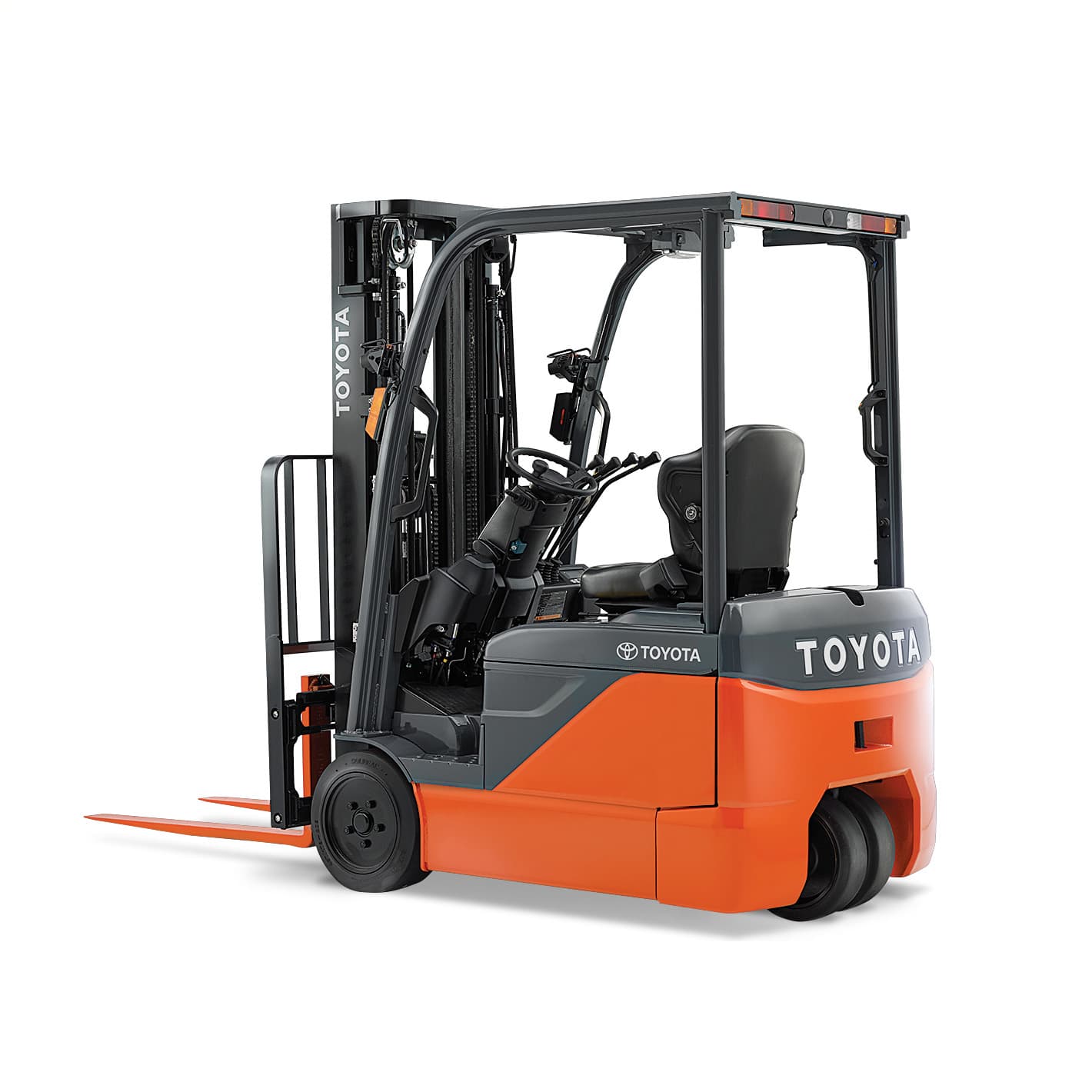
Two Machines, Two Different Jobs
Telehandlers and rough terrain forklifts both look like they belong on a construction site, and both are built to move heavy loads across dirt, gravel, and uneven grades. But the way each machine lifts is fundamentally different, and that difference decides which one you actually need.
A rough terrain forklift lifts straight up, much like a warehouse forklift but with larger tires, higher ground clearance, and a more rugged frame. A telehandler uses an extending boom that reaches up and out, similar to a small crane. Picking the wrong one can mean wasted time, awkward repositioning, or a load that simply can't get where it needs to go.
How a Rough Terrain Forklift Works
Rough terrain forklifts use a vertical mast, the same basic lifting principle as a standard forklift, just scaled up for outdoor conditions. Key traits:
- Straight vertical lift — the load rises directly above the truck, with no forward reach
- Pneumatic tires and high clearance — built for gravel, dirt, mud, and unfinished grades
- Simple, stable lifting path — predictable for stacking pallets or setting loads at a fixed point
- Strong straight-ahead capacity — efficient when the load and the drop point are close together
This makes rough terrain forklifts a good fit for material laydown yards, unloading delivery trucks on an active site, and moving palletized goods short distances across uneven ground.
How a Telehandler Works
A telehandler (telescopic handler) trades the vertical mast for a hydraulic boom that extends forward and up. That single design change opens up a different set of jobs:
- Reach beyond the machine's footprint — place a load over a foundation, wall, or obstacle without driving closer
- Variable lift height and angle — useful for setting materials on upper floors or rooftops
- Attachment versatility — forks, buckets, and truss booms often swap onto the same carriage
- Compact positioning — the machine can stay put and let the boom do the reaching
Telehandlers earn their keep on sites where the load has to go up and over something: framing lumber onto a second floor, roofing materials onto a roof edge, or block and mortar over a foundation wall.
Comparing the Two on Uneven Ground
Both machines are rated for rough terrain, but "rough terrain" doesn't mean identical performance:
- Reach: Telehandlers extend forward and up; rough terrain forklifts lift straight vertically only.
- Footprint flexibility: A telehandler can stay in one spot and reach the load point; a rough terrain forklift generally needs to drive to the load point.
- Load path visibility: Straight-mast lifting gives operators a clearer, more predictable view of the load path, which matters in tight yard layouts.
- Attachments: Telehandlers typically support a wider attachment range beyond forks.
- Stability at extension: A telehandler's capacity drops as the boom extends and rises — always check the machine's load chart at the reach and height you actually need.
Matching the Machine to the Site
Ask a few questions before booking:
Does the load need to travel up and over an obstacle? If you're setting materials on a roof, over a wall, or onto scaffolding, a telehandler's reach is the deciding factor.
Is the terrain rough but the lift path simple and vertical? If you're stacking pallets in a yard or unloading trucks on flat-ish, unimproved ground, a rough terrain forklift is usually the more efficient tool.
How much ground clearance and tire grip do you need? Both categories are built for outdoor conditions, but confirm tire type and clearance match your specific site — mud and loose grade can rule out lower-clearance options.
What attachments will you actually use? If the job calls for buckets, grapples, or a truss boom in addition to forks, a telehandler's attachment compatibility usually wins out.
Get the Right Fit for Your Jobsite
Telehandlers and rough terrain forklifts solve different lifting problems, and the right choice comes down to whether your load needs to go straight up or reach out and over. If you're not sure which fits your project, our team can help you match capacity, reach, and terrain requirements to the job.
Rates vary by location, duration, and equipment configuration. Visit our equipment page for live pricing and availability across our service areas, including Los Angeles, New York City, Dallas, Chicago, Houston, Charlotte, and San Jose.