
Boom Lift Safety: Fall Protection & Operator Basics
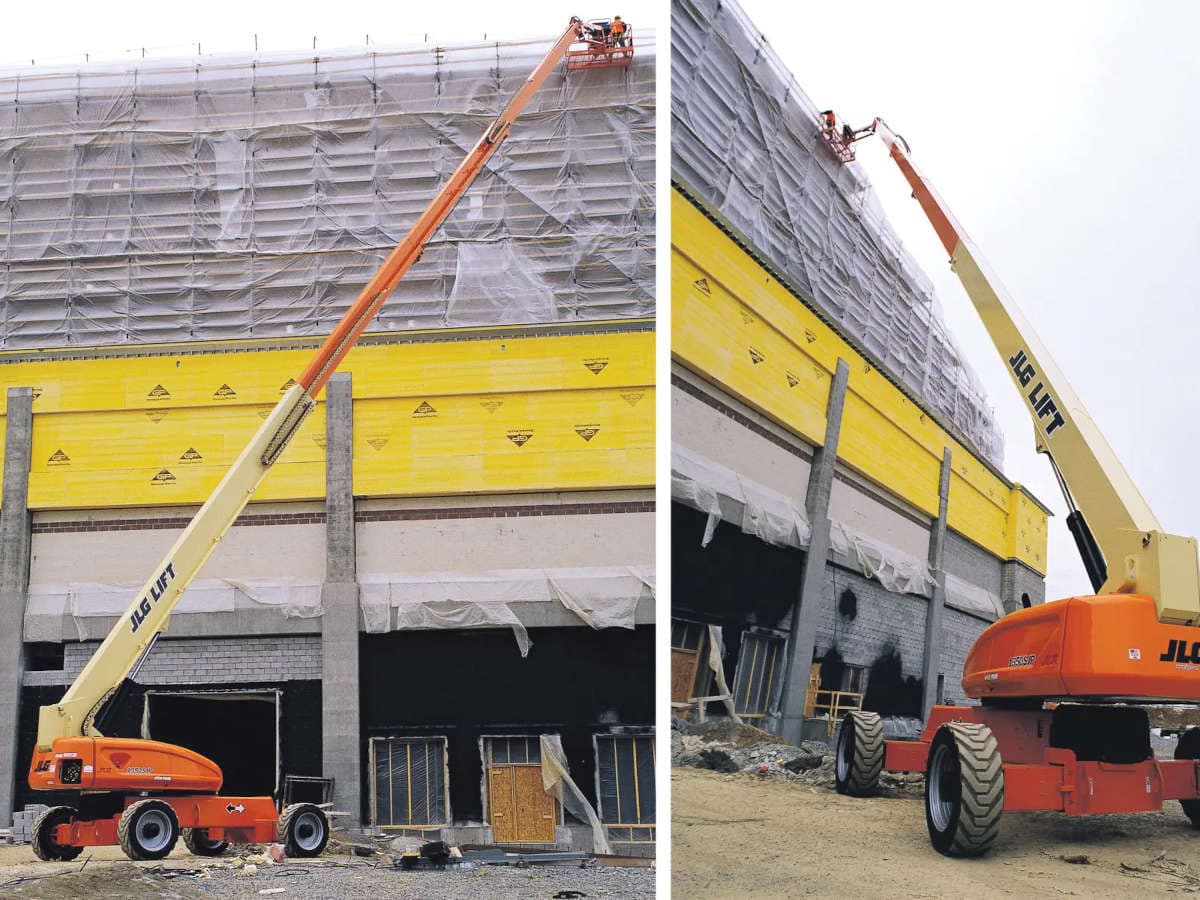
Boom lifts give crews reach and height that scaffolding and ladders can't match, but that height is exactly why fall protection and daily inspection routines matter so much. Whether you're running a telescopic boom on a warehouse job or an articulating boom for tree trimming and facade work, the basics below apply every time you step into the platform.
Why Fall Protection Is Non-Negotiable on Boom Lifts
Unlike scissor lifts, which typically only require guardrails, most boom lift manufacturers and OSHA guidance call for a full body harness with a lanyard anytime an operator is in a boom lift platform. The reason is physics: a sudden bucket movement, a pothole, or a quick stop can create enough force to eject an unrestrained worker over the guardrail. A harness and lanyard keep you inside the platform if that happens.
Harness Requirements
- Use a full body harness — never a simple belt — rated for fall arrest or fall restraint as specified by the equipment manufacturer.
- Inspect the harness webbing, stitching, and D-rings before every shift for cuts, fraying, or UV damage.
- Adjust straps snugly; a loose harness can shift or fail to hold properly during a fall event.
- Retire and replace any harness that has been involved in a fall arrest, regardless of how minor it looks.
Tie-Off Points and Lanyard Length
- Attach your lanyard only to the manufacturer-designated anchor point in the platform, usually marked or noted in the operator's manual — never to the guardrail itself or an improvised point.
- Keep lanyard length short enough that you cannot go over the rail, but long enough to move around the platform to do your work.
- Self-retracting lanyards are common on boom lifts because they limit slack while still allowing movement.
- Stay tied off any time the platform is elevated, not just when working near an edge.
Pre-Use Inspection: What to Check Before You Climb In
A thorough walk-around and function test before every shift catches most problems before they become incidents. Boom lifts have more moving parts and hydraulic points than scissor lifts, so give the inspection real time.
Ground-Level Walk-Around
- Check tires or tracks for damage, wear, or low pressure.
- Look under the machine for hydraulic leaks, loose hoses, or fluid stains.
- Inspect the boom sections, pivot points, and cylinders for cracks, bent metal, or missing hardware.
- Confirm outriggers (if equipped) are intact and pins are secure.
- Verify placards, load charts, and operator manual are present and legible.
Platform and Controls
- Test the guardrails and gate/chain for secure latching.
- Confirm the harness anchor point is intact and not cracked or corroded.
- Check that emergency lowering controls and the ground-level emergency stop both function.
- Test upper and lower controls for smooth, responsive operation before moving to full extension.
- Verify horn, alarms, and any tilt/level indicators are working.
Site Conditions
- Survey the ground for slope, soft spots, holes, or overhead obstructions like power lines and structural beams.
- Confirm the machine is rated for the ground surface and load you'll be working with.
- Check wind conditions — boom lifts have manufacturer-set wind speed limits that are easy to overlook on a busy job site.
Building the Habit
Fall protection and pre-use inspection only work if they happen every time, not just when someone's watching. Make the harness-and-tie-off step part of getting into the platform, and treat the walk-around as a fixed part of the shift start — not an optional extra when time is tight. Keep a laminated inspection checklist in the cab or with the machine so nothing gets skipped when a crew is rotating operators.
Renting the Right Boom Lift
Matching the machine to the job — reach, platform capacity, indoor vs. rough-terrain tires — is part of working safely, since an undersized or mismatched lift pushes operators into risky workarounds. Our team can help you choose between articulating and telescopic booms based on your site and height needs. Rates vary by location and rental duration, so check current availability and pricing at dependableliftrentals.com/en/equipment.
Whatever boom lift you rent, pair it with a proper harness, a designated tie-off point, and a full pre-use inspection every single time — that routine is what keeps aerial work safe.